Omar Shaban's Facebook posts archived in full text in three languages, each linking to the original post.
2026-10-12
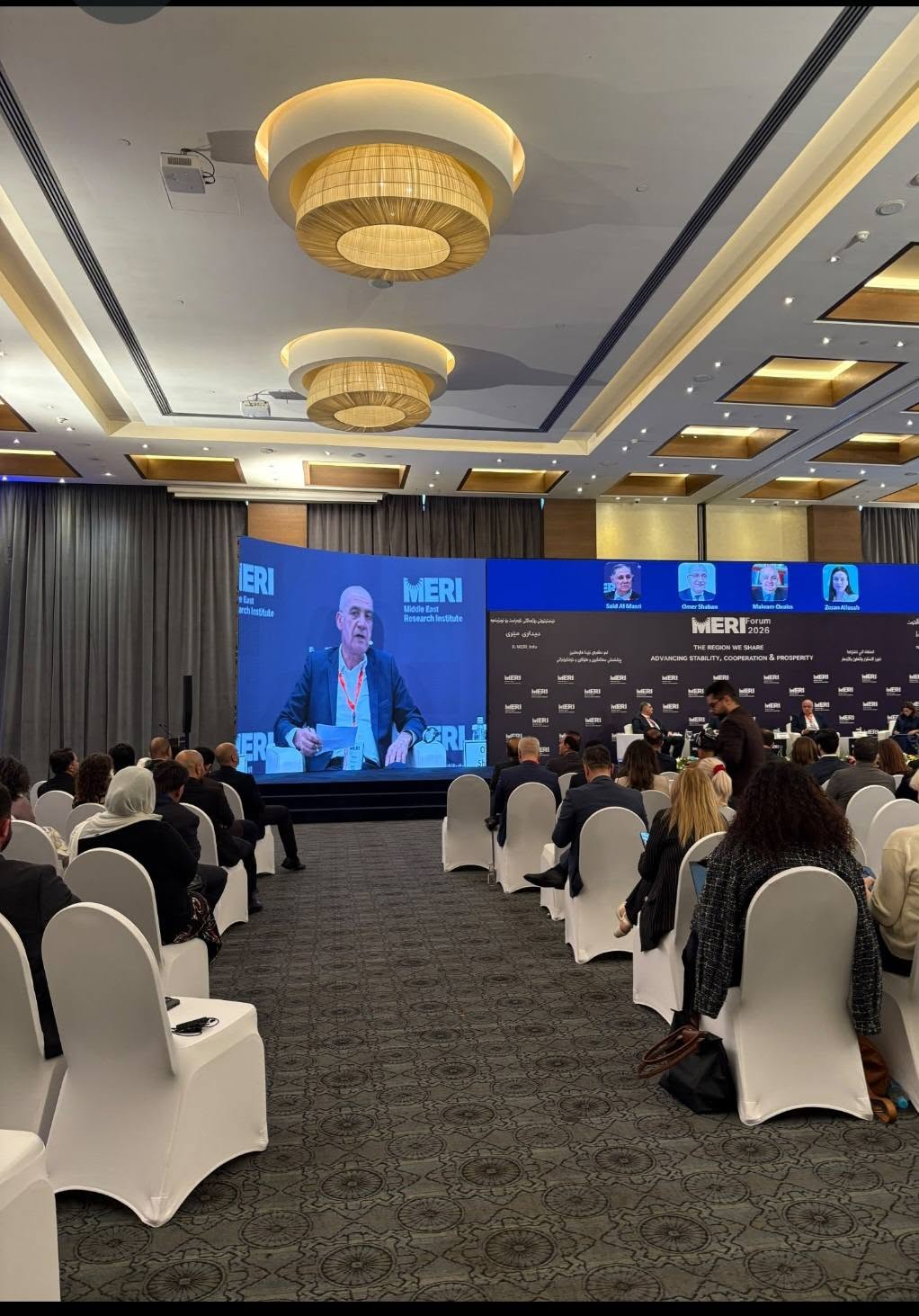
Today, Monday, in Erbil, the capital of Iraqi Kurdistan,
at the international conference organised by the Middle East Research Institute (MERI), with colleagues from Syria, Lebanon and Jordan, and with a very large participation from countries around the world.
The political contract among the Arab states must be rewritten so that it rests on shared interests and on respect for the particularity of each case. The use of the Palestinian question in internal and regional conflicts must stop. The catastrophic war on the Gaza Strip has exposed the weakness of what had been relied upon.
## Legislative Elections, November 2026
With the issuance of the presidential decree to hold the Palestinian legislative elections on 28 November 2026 after a twenty-year interruption, the decision to hold elections did not receive much welcome or attention in the Palestinian street for many reasons, most of them very valid, foremost among them the ongoing war against our people in the Gaza Strip and Israeli policies in the West Bank. Israel can obstruct the implementation of the elections by preventing the entry of materials, equipment, and observers into the Gaza Strip, and by tightening checkpoints and restricting people’s movement in the West Bank.
Therefore, it is necessary to address the international community, which has never ceased demanding reform and the holding of elections, so that it plays its role in this context. At the Palestinian level, serious work must be undertaken to address all the obstacles that could prevent the elections from being held, among these obstacles:
First: Enabling citizens of the Gaza Strip who have lost their homes and identity cards to run and vote using alternative means such as a driver’s license, bank card, university certificates, and any other supporting documents within a clear legal framework and with guarantees preventing manipulation. International institutions operating in the Gaza Strip can also contribute to this process, given the databases and technical capacities they possess, including the use of digital identification and verification tools and electronic visual identity, in full coordination with the competent Palestinian authorities.
Second: War and forced displacement must not prevent the participation of citizens who left the Gaza Strip because of the war, including the wounded, students, and family members residing in the Arab Republic of Egypt or in any other country. Depriving these people of participation because they are outside Palestine as a result of coercive circumstances created by the war would be extremely difficult politically and nationally. Therefore, exceptional arrangements should be sought to guarantee their right to participate, whether through polling centers in Palestinian embassies and consulates, or through other mechanisms that can be agreed upon and provided with the necessary legal and technical guarantees.
Third: Reviewing legal restrictions in light of the exceptional circumstances
The Central Elections Commission, as one of the Palestinian institutions that enjoys broad respect, is of particular importance in managing the electoral process and preserving its integrity. However, the current legal framework imposes restrictions related to the place of residence of the voter and the candidate, and the Elections Law does not allow electronic voting.
Under normal circumstances, concerns related to electronic voting can be understood, especially those related to cybersecurity, system breaches, external interference, and ballot secrecy. But the exceptional circumstances imposed by the war on the Gaza Strip require a greater degree of flexibility and a serious search for non-traditional solutions.
Palestinians have previously found practical alternatives under exceptional circumstances; for example, the General Secondary Education Examination was held in Palestinian Authority embassies in more than forty countries. From here, a similar model can be developed for electoral participation outside Palestine, while studying the possibility of using electronic voting or remote voting, if an independent, secure, and auditable technical system can be provided, in a manner that guarantees ballot secrecy and the integrity of the results.
The question should not be: can the elections be held according to traditional procedures? Rather, it should be: how can the right of Palestinians to vote be guaranteed, despite the exceptional circumstances imposed by the war?
Fourth: The responsibility of the international community and diplomatic bodies
International institutions and diplomatic bodies must clearly demand that Israel allow the entry of electoral materials, equipment, bulletins, and informational materials into the Gaza Strip, and not use the restrictions imposed on the Strip as a means of obstructing the Palestinian democratic process.
Allowing international observers and the foreign press to enter the Gaza Strip must also be an essential part of any international effort to guarantee the integrity and transparency of the elections. The presence of observers and media outlets is not a political luxury; rather, it constitutes an important element in building confidence, monitoring the electoral process, and documenting any violations or obstacles it may face.
There is no doubt that this is a struggle that requires continued discussion and collective thinking.
On the appointment of ambassadors, female ambassadors, and Palestinian diplomatic work:
The appointments of ambassadors from among the sons and daughters of officials continue in succession, to the point that it can be said that every official has one ambassador or more among his children, as though this were an acquired right and part of the perks of public office. These appointments are made, most of which do not meet the minimum required standards of transparency and equal opportunity, and without any concern for the stance of the people, who are weighed down by a devastating war, settler attacks, land theft, and death at checkpoints and crossings.
These appointments are made amid the multiple crushing crises facing the Palestinian people in the Gaza Strip and the northern governorates, and amid the financial incapacity of the Palestinian Authority itself. Its 170,000 employees and tens of thousands of vulnerable families receive mere scraps. Most of these appointments are in countries far from us that have no political or economic interest connecting them to us and have no influence on the international arena, such as El Salvador, Colombia, and Kyrgyzstan, and countries in Central Asia and Africa, while Palestine’s embassies in central countries suffer from weak resources and weak performance.
Palestinian diplomatic work in general, and these appointments in particular, have for a long time been subjected to sharp criticism by society and institutions inside Palestine and in the diaspora because of the method of appointment, weak performance, and some scandals that have marred certain embassies and missions, without any concern, deterrence, oversight, or review.
This certainly explains clearly the reason for the failure of Palestinian diplomacy, the decline in support for the cause, and the retreat of official and civic work in regions around the world. Appointments through favoritism have dangerous repercussions for performance, commitment, oversight, and evaluation.
I participated in many conferences on Middle East issues where Palestine was, unfortunately and astonishingly, absent. As I wrote several times previously: I am usually confronted with an embarrassing question from foreign journalists and diplomats: Where is the position of the Palestinian Authority on a given issue? What is the work of the Palestinian embassies? Do you have a foreign minister for Palestine?
The issue is not merely an ordinary job; rather, this is manipulation and recklessness regarding the state of the cause for which we have struggled for a full century.
The Law on the Formation of Political Parties... An Entry Point for Completing the Palestinian Constitutional System
Building a state based on the rule of law and constitutional institutions requires completing the legislative structure regulating political life. At the forefront of this is the adoption of a modern law on political parties, as one of the most important pillars of the democratic system and one of the requirements of good governance.
One of the main reasons for the disgraceful division in June 2007 was the incompleteness of the constitutional system in Palestine. All Palestinian entities entered the elections without registering themselves with the Palestinian Ministry of Interior. All Palestinian political entities rely on historical and militant legitimacy rather than constitutional legal legitimacy. Most of these political entities operate under the banner of the Palestine Liberation Organization as part of a stage of national liberation, rather than as legally registered parties in the legal sense.
In this context, a distinction should be made between the Palestine Liberation Organization as the legitimate representative of the Palestinian people and the framework of national liberation movements, and the political parties that operate within the Palestinian political system, participate in elections, and hold positions in the institutions of the Palestinian National Authority. Each has a different legal nature and political function, which necessitates the existence of a legal framework regulating parties without prejudice to the national role of the Palestine Liberation Organization.
The absence of a law on parties has led to a major disparity in levels of transparency and governance. While private companies and civil society organizations are required to prepare periodic financial and administrative reports, disclose their sources of funding and areas of expenditure, and submit to oversight by the competent authorities, these political entities are not subject to similar legal requirements, nor are they obliged to disclose their internal regulations, decision-making mechanisms, organizational structure, or sources of funding, which limits levels of accountability and public oversight. Not once did the elected Legislative Council, in either of its two terms, hold an accountability session regarding any political entity or any of the institutions affiliated with these entities. Likewise, some representatives of the political entities present in the dissolved Legislative Council, the government, and other official institutions of the Authority are known to us only by their president or representative.
Among the manifestations of distortion and duplicity is that some of these political entities, if not all of them, entered the legislative elections within the framework of the Oslo Accords without recognizing them, like someone riding a train without paying for the ticket. Or that one assumes the position of minister, ambassador, or official in the Palestinian Authority, which was born pursuant to a political agreement, while not recognizing it and demanding its annulment. Certainly, you have the right not to recognize it, of course, but this position obliges you not to participate in it and not to benefit from it.
Issuing a law on political parties has become a constitutional and institutional necessity to strengthen the Palestinian democratic system. This law should include the conditions for establishing parties, the requirements for official registration, the adoption of declared internal, financial, and administrative regulations, periodic disclosure of financial statements, and mechanisms of oversight and accountability, in a manner that guarantees equality among all political actors and reinforces the principles of transparency, integrity, and good governance. Completing the Palestinian constitutional system requires building an integrated legal framework that regulates political life and subjects all actors, without exception, to the rule of law. A modern state is not built on historical legitimacy alone, however important it may be, but on firmly established constitutional institutions, clear laws, equal accountability, and full respect for the principle of the rule of law.
For the record
The war on the Gaza Strip has not stopped despite the agreement in mid-October last year: 1,400 victims and several thousand wounded and injured since that time. Humanitarian aid has not reached even half of what was agreed upon. There has been a spread of diseases of all kinds, and a spread of rodents and reptiles that have killed children and women. Electricity is nonexistent. Hospitals are suffering from a shortage of equipment and medicines. Thousands of wounded are in urgent need of travel and treatment. Thousands of students are waiting to travel to join their universities abroad. 40,000 Tawjihi students are waiting for the unknown. Thousands of families are suffering extreme poverty. Thousands of children are suffering from physical and psychological illnesses. The water is contaminated, the roads are destroyed, the homes are demolished, and no construction materials have entered the Strip. Tens of thousands of families who had houses, apartments, and villas, with all they contained of photos, memories, certificates, heirlooms, and clothes, are living in tattered tents in a scorching summer and a bitter winter. The war is still ongoing, but under the radar of the global media.
Opinions and positions change with changes in posts and places.
Therefore, the most important principle for judging people and issues is:
"Put yourself in the victim's place so that you may understand his suffering."
Success steeped in blood and pain, and in determination and resolve
The education sector in Palestine in general, and in the Gaza Strip in particular, has been and remains one of the victims of the war on the Gaza Strip, which has continued without pause for two and a half years.
Study and diligence from among tents that protect neither from the summer heat nor the winter cold, and from among destroyed homes and limited means, and most importantly within a very painful context due to the loss of loved ones and family...
51,499 male and female students in the Northern Governorates and 37,698 male and female students in the steadfast Gaza Governorates.
106,000 Tawjihi students in the Gaza Strip over the past three years continue their education and work hard despite the blocked horizon and the absence of hope for completing the educational path. The closure of the crossings, the destruction of educational institutions, the financial crisis, and families’ inability to bear the costs of study... it is a continuous cycle of suffering...
Palestinians have nothing but education, which is the most important means of struggle, survival, and victory. Preserving what remains of society, institutions, and youth, and rebuilding, requires that it be at the top of priorities and deserves every attention.
A thousand congratulations to everyone, with great hope that the coming days will bring a better future.
Salvation is only in our hands..
1,200 victims and thousands of wounded and injured since mid-October 2025
The machinery of killing, destruction, and the occupation of lands in the already occupied and besieged Gaza Strip has not stopped, despite the signing of the illusory agreement to stop the war. The war government in Israel has succeeded in diverting global attention from the situation in the Gaza Strip and in easing the pressure on it from friends and allies.
I say, based on what I know, hear, and read... that the Western and Arab world feels some relief of conscience after the signing of the agreement to stop the war, with the formation of the Peace Council, which has nothing of peace in its name, the Gaza Administration Committee, and the continuous, tedious talk about reconstruction, international forces, and so on.
Every day, 5–10 citizens are hunted down and killed as if they were birds in the desert with no value, and without any concern from any party. The war continues from one side only, while the world feels at ease on the assumption that an agreement to stop the war has been signed.
As I said and wrote previously, there is not a single reason that would push the war government to change the current reality. It is a one-sided war in which it loses nothing and is not drained, neither militarily nor economically, and its forces have not been exposed to any danger. There is no factor pressuring it to enter the second phase; rather, it has the ability, desire, and intention to continue this reality for the coming months, if not for years. And it has the capability and support to continue the war on multiple fronts at the same time.
The one-sided war continues under the radar of international attention. The world, the Western street, the universities, and the International Criminal Court have not stopped any war. The world grows bored of following any cause, no matter what it is; the global conscience has become accustomed to our death. The world has other concerns.
I visited Bosnia and Sarajevo several times and listened there to testimonies about the war, which lasted three and a half years (1992–1995), the deliberate killing, the severe siege, the starvation, and the sport of sniping innocents that wealthy people, bored and seeking amusement, competed in. All of this happened in the middle of Europe and the Western world, not far from it, as is the case in the Gaza Strip in particular and Palestine in general.
In our Palestinian case, there is no real international pressure other than statements, appeals, and condemnations—and there will not be. On the contrary, trade with Israel and purchases of weapons and military and security technology have increased.
We do not matter to the world, and we have neither gas nor oil, nor do we control any strait. I have written and said this dozens of times since the start of the catastrophic war:
The solution is only in our hands.
A call to the Palestinian Elections Commission to carry out the electoral process in the remaining areas of the Strip.
After the great success of the elections in the Deir al-Balah Municipality on 25 April 2026, and the tremendous activity of the elected council in Deir al-Balah, I respectfully call on the Palestinian Elections Commission to set a timetable for conducting elections in the remaining areas of the Gaza Strip.
Our people have the right to exercise their right to elections of all kinds.
## On the constitutional amendments regarding legislative elections in Palestine, which is still under occupation, war, and displacement:-
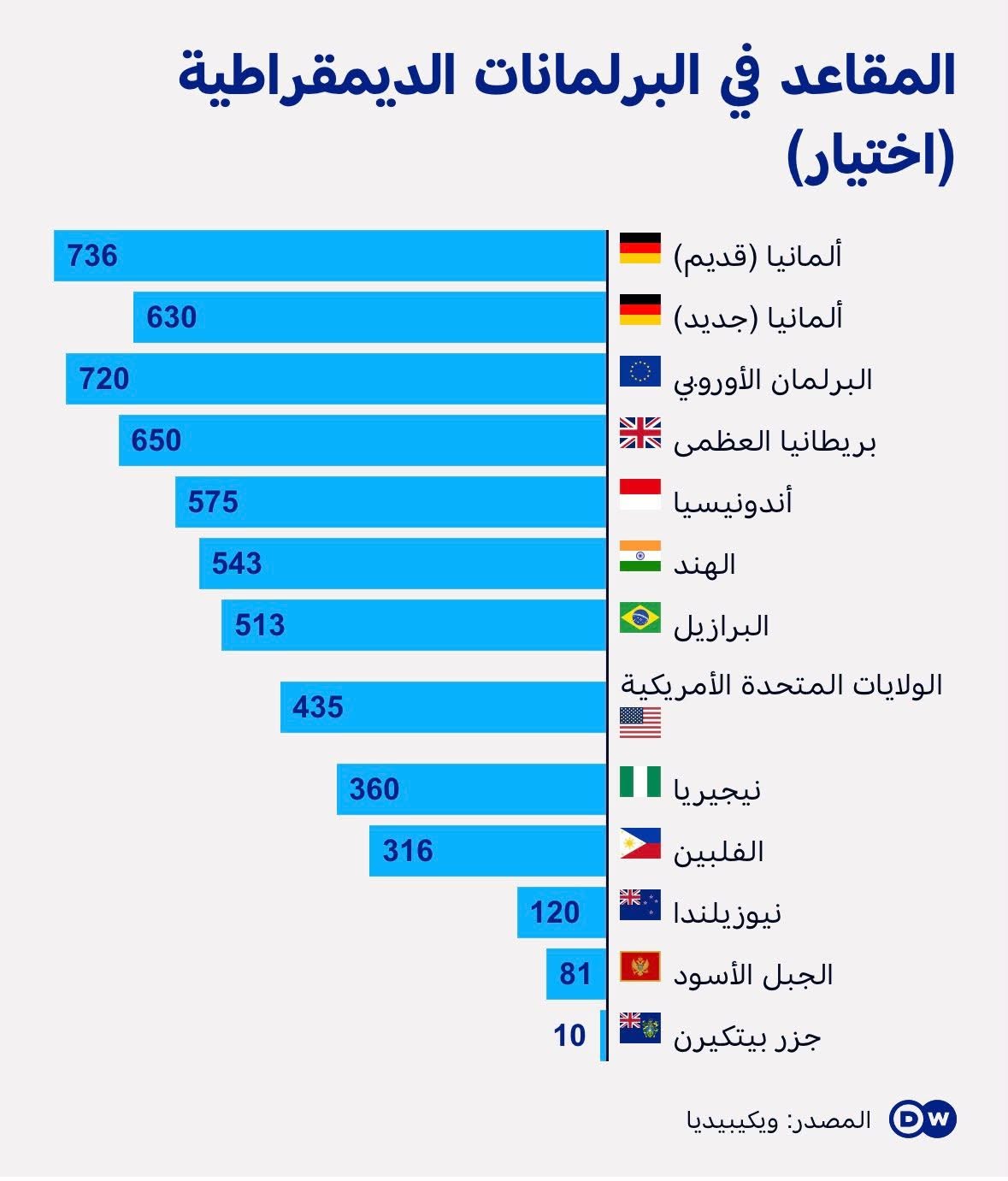
The draft new Palestinian constitution and the elections law raise the number of seats in the Legislative Council to 200 deputies, with an electoral threshold for entry of only 1%. It is worth noting that the number of members of the Palestinian Legislative Council in the first elections in 1996 was 88 seats; this was increased to 132 in the second elections in 2006, and now it is proposed to increase it to 200 seats. That is, the number of deputies is increased with every electoral cycle.
There is no logical or public-interest justification for increasing the number of deputies from 132 to 200, as a large number hinders work, slows decision-making, makes it more bureaucratic, and has enormous cost implications. The average cost per deputy in the Legislative Council amounts to $12,000 per month (car, aides, transportation, communications, housing allowance..).
For comparison, the Israeli Knesset has only 120 seats. In Egypt, with a population of 110 million, it is 596, in Britain it is 650, and in Jordan only 138.
In China, enormous in terms of population, area, sects, and schools of thought, the number of seats in the Chinese parliament for a population of one billion is 2,977 members. This council holds its full session once a year, while a smaller body known as the Standing Committee of the National People’s Congress, composed of about 150 members, acts on its behalf in managing legislative affairs. That is, the people’s representative council in China is only 150 deputies.
Lowering the electoral threshold for entry into parliament to 1% is a recipe for fragmentation, scattering efforts, and strengthening family- and clan-based politics. The electoral threshold in Jordan is 7%, and in Israel it is 3.25%.
With this proposal, a large family in the Gaza Strip or the West Bank could elevate a deputy representing it with the votes of its own members alone. Two or more families may form an alliance to seize a number of seats. Some very small organizations that have no real presence on the ground may also be able to win one or more seats in the Legislative Council easily.
The issue is not numbers and quantity; the issue is competence, effectiveness, and working in the interest of the people and the nation.